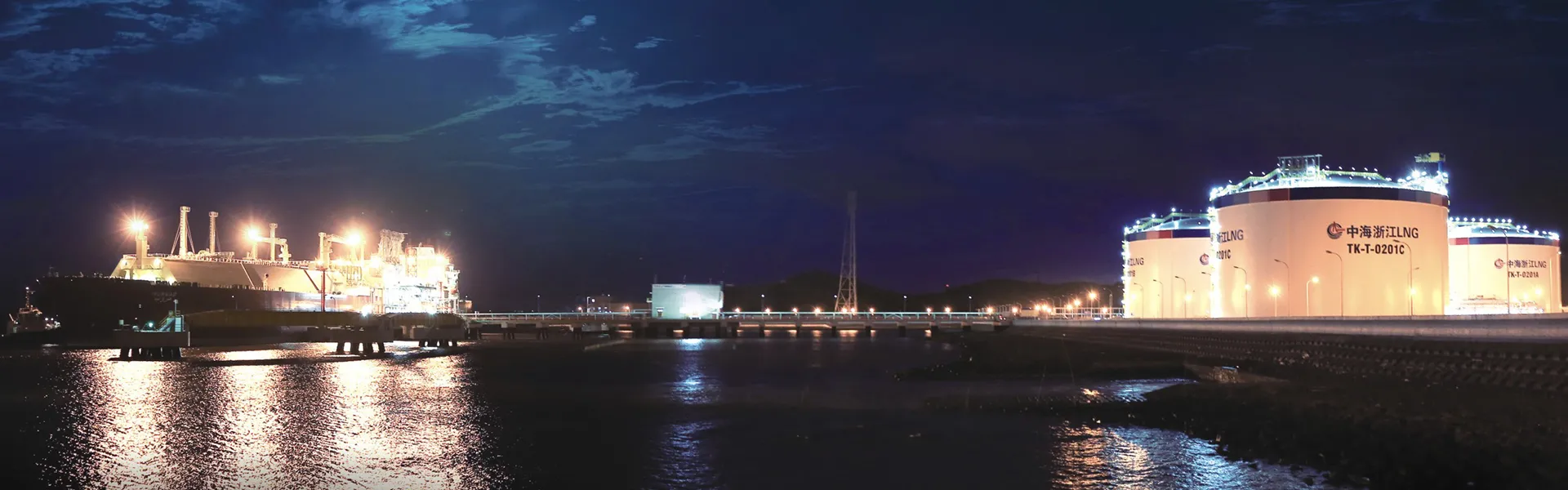
Roof lifting is a critical construction method used in large LNG storage tank projects to improve safety, installation efficiency, and structural accuracy. Instead of assembling the tank roof at high elevation, the roof structure is completed at ground level and then lifted into position using a controlled hydraulic lifting system. This approach reduces high-altitude work, improves quality control, and minimizes construction risks. For LNG EPC contractors and energy project owners, selecting an experienced engineering partner with proven roof lifting capability is essential for ensuring reliable tank construction and long-term operational safety.
Safety is one of the most important considerations in LNG storage tank construction.
Large LNG tanks are complex cryogenic structures that require precise engineering, strict quality control, and carefully managed construction processes. Among all construction stages, roof installation is considered one of the most technically demanding operations because it involves large steel structures, heavy lifting equipment, and strict alignment requirements.
To improve safety and efficiency, many LNG tank projects adopt the roof lifting method, where the tank roof is assembled on the ground and lifted into its final position after completion.
This construction technique has become an important practice in modern LNG storage tank engineering, helping contractors reduce risks while improving installation quality.
For companies such as CIMC ENRIC, which provides LNG storage equipment and integrated energy solutions, construction methodology is an essential part of delivering safe and reliable LNG infrastructure projects.
Roof lifting is a construction technique used for large vertical LNG storage tanks where the roof structure is fabricated at ground level and then lifted to the top of the tank using hydraulic jacking equipment.
Traditional construction methods often require workers to perform extensive activities at high elevations. Roof lifting changes this approach by moving much of the assembly work to the ground.
The basic process includes:
Roof structure fabrication on the ground
Installation of roof components and accessories
Connection of hydraulic lifting equipment
Controlled lifting operation
Positioning and fixing of the roof structure
This method is widely used in large LNG tanks, cryogenic storage tanks, and other industrial storage facilities.
LNG storage tanks operate under extremely low temperatures and require high structural reliability. Any construction error can affect future tank performance.
Roof lifting improves safety in several important ways.
One of the biggest advantages of roof lifting is reducing the amount of work performed at elevated heights.
Traditional roof installation may require:
Temporary scaffolding
High-altitude welding
Heavy component handling
Complex worker positioning
By assembling the roof at ground level, workers can complete more activities in a safer environment.
| Traditional Installation | Roof Lifting Method |
|---|---|
| More high-altitude operations | More ground-level assembly |
| Higher worker exposure risk | Reduced safety risk |
| Difficult quality inspection | Easier inspection access |
| More complex logistics | Controlled lifting process |
LNG tanks require strict welding quality because they store cryogenic liquids under demanding operating conditions.
Ground-level roof assembly allows engineers to perform:
Better welding inspections
More accurate dimensional checks
Easier non-destructive testing
Improved quality monitoring
A controlled working environment helps reduce defects before the roof reaches its final position.
Large LNG tank roofs must be installed with precise alignment.
During roof lifting, engineers use synchronized hydraulic systems to control:
Lifting speed
Load distribution
Structural balance
Final positioning accuracy
This reduces the possibility of deformation caused by uneven lifting forces.
A successful roof lifting operation requires detailed engineering preparation.
Before lifting begins, engineers analyze:
Roof weight
Lifting points
Structural loads
Weather conditions
Safety requirements
Detailed calculations ensure the lifting system can operate safely.
The tank roof is assembled at ground level, including:
Roof plates
Supporting structures
Insulation-related components
Necessary equipment connections
This stage provides better working conditions compared with high-altitude installation.
During lifting, multiple hydraulic jacks operate together to raise the roof gradually.
Key requirements include:
Synchronized lifting
Continuous monitoring
Emergency response planning
Weather condition evaluation
After reaching the designed position, the roof is fixed and inspected before the next construction stage begins.
| Item | Roof Lifting Method | Traditional Installation |
|---|---|---|
| Worker Safety | Higher safety level | More high-altitude work |
| Quality Control | Easier inspection | More challenging |
| Construction Efficiency | Faster assembly | Longer installation period |
| Equipment Requirement | Hydraulic lifting system | More temporary structures |
| Risk Management | More predictable | More complex |
For large LNG storage tanks, roof lifting provides a more controlled construction approach.
Roof lifting is commonly applied in:
Large LNG receiving terminals require storage tanks with high reliability and strict safety requirements.
Independent LNG storage projects often use roof lifting methods to improve construction efficiency.
Large cryogenic tanks for industrial gases may also adopt similar construction approaches.
As global LNG infrastructure expands, advanced construction methods are becoming increasingly important for project delivery.
Although roof lifting improves safety, careful management is still required.
Important factors include:
| Safety Factor | Consideration |
|---|---|
| Engineering Design | Accurate lifting calculations |
| Equipment Selection | Reliable hydraulic systems |
| Weather Monitoring | Avoid unsuitable conditions |
| Worker Training | Professional operation teams |
| Quality Inspection | Continuous monitoring |
A successful roof lifting operation depends on both engineering design and project execution capability.
LNG storage tank projects typically follow internationally recognized engineering standards depending on project requirements and location.
Common references include:
American Society of Mechanical Engineers standards for pressure and storage equipment
International Organization for Standardization standards for industrial equipment quality management
Local regulations for LNG storage and construction safety
Project owners and EPC contractors should evaluate supplier experience with applicable standards during equipment selection.
For LNG storage projects, equipment capability alone is not enough. Project execution experience is equally important.
Key evaluation factors include:
| Factor | Why It Matters |
|---|---|
| LNG tank experience | Ensures project understanding |
| Engineering capability | Supports customized solutions |
| Quality control system | Reduces construction risks |
| International project experience | Supports global compliance |
| EPC capability | Improves project coordination |
A reliable supplier should be able to support the complete project lifecycle, from engineering design and manufacturing to installation support.
CIMC ENRIC provides LNG storage solutions and industrial gas equipment for global energy and clean energy applications.
The company combines:
Pressure vessel manufacturing expertise
LNG engineering experience
Customized project solutions
International project delivery capability
For LNG infrastructure projects, CIMC ENRIC focuses on providing reliable equipment and engineering support that meets different market requirements.
As LNG continues to play an important role in global energy transition, storage projects are becoming larger and more technically advanced.
Future LNG tank construction trends include:
Higher construction efficiency
More digital project management
Improved safety monitoring
Advanced engineering methods
Greater focus on lifecycle reliability
Construction techniques such as roof lifting will continue to support safer and more efficient LNG infrastructure development.
Roof lifting is more than a construction technique—it is an important safety improvement method for modern LNG storage tank projects.
By reducing high-altitude work, improving quality control, and enabling more accurate installation, roof lifting helps EPC contractors and project owners achieve safer and more reliable LNG tank construction.
For companies planning LNG infrastructure projects, selecting an experienced engineering partner with proven construction expertise is essential.
With experience in LNG and industrial gas solutions, CIMC ENRIC continues to support customers worldwide with reliable equipment and engineering capabilities.
Looking for a reliable LNG storage solution provider? CIMC ENRIC offers customized LNG tank engineering and integrated solutions for global energy projects. Contact our team to discuss your project requirements.
Roof lifting is a method where an LNG tank roof is assembled at ground level and lifted into position using hydraulic systems.
It reduces high-altitude work and allows better control of construction quality.
Yes, it is widely applied in large LNG storage tank projects.
Hydraulic lifting systems and synchronized control equipment are commonly used.
The main benefits include improved safety, better quality control, and higher construction efficiency.
Engineering design, equipment reliability, weather conditions, and operator experience are key factors.
Yes, ground-level assembly allows easier inspection and quality management.
LNG terminals, energy companies, industrial gas facilities, and clean energy projects use LNG storage tanks.
CIMC ENRIC provides LNG equipment, engineering solutions, and project support for global customers.
Contact Us
Related Information
Copyright © CIMC ENRIC All Rights Reserved | Sitemap Technical Support  Privacy Policy | CIMC ENRIC Tag
Keywords: CIMC ENRIC LPG Products CNG Products LNG Products


