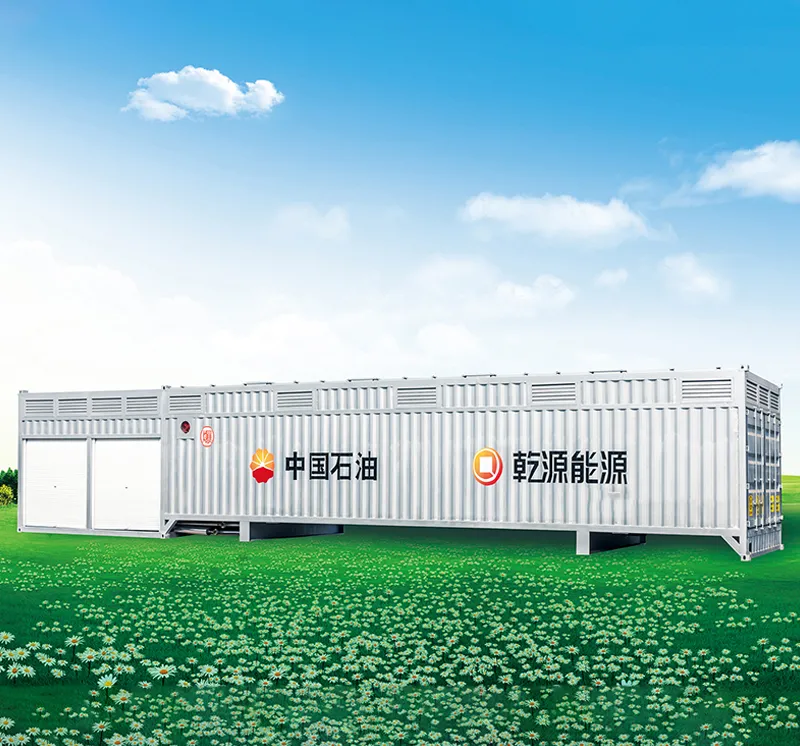
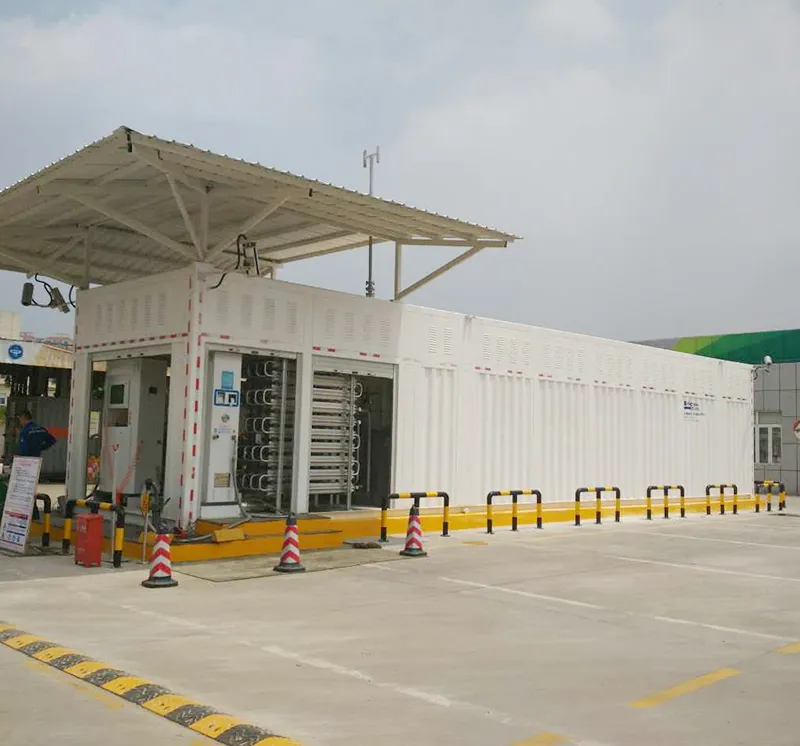
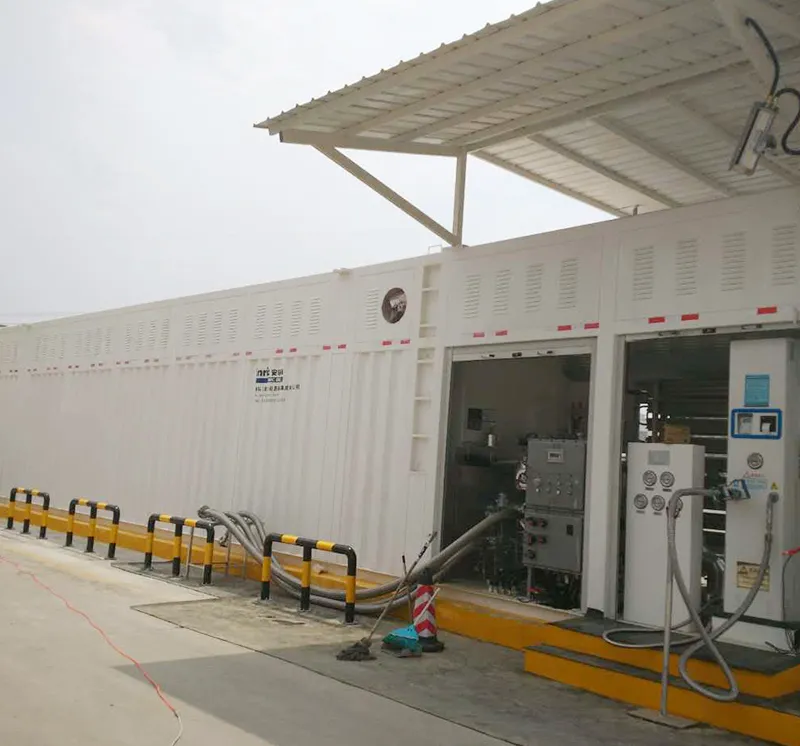
CIMC ENRIC's LNG all-in-one filling station integrates key equipment for liquefied natural gas (LNG) vehicle refueling, including a cryogenic storage tank, submerged pump, LNG dispenser and PLC control system. Its integrated design helps simplify equipment arrangement and on-site installation while supporting project-specific configurations for different refueling requirements.
Designed for LNG fueling applications, the station can be configured according to required refueling capacity, storage volume, site conditions and operating requirements. CIMC ENRIC has reported supplying more than 200 all-in-one filling stations in China, demonstrating its experience in integrated LNG station solutions.
Integrated Equipment Design: Combines the main storage, pumping, dispensing and control equipment in one station configuration.
Flexible Configuration: Supports selected pump and dispenser options according to project requirements.
Compact Equipment Layout: Integrates key systems to help optimize the available installation area.
PLC Control: Supports coordinated control of station equipment.
Project-Based Engineering: Configuration can be reviewed according to refueling demand, site conditions and applicable local requirements.
Contact CIMC ENRIC to discuss an LNG filling station configuration for your project.
Parameter | Existing Published Specification |
|---|---|
Filling capacity | ≥18 m³/h |
LNG tank geometric volume | 30 m³ / 60 m³ |
Total power | 25 kW |
Booster vaporizer capacity / working pressure | 300 Nm³/h / 1.6 MPa |
Design pressure | 2.0 MPa |
Number of submerged pumps | 1 or 2 sets, optional |
Number of dispensers | 1 or 2 sets, optional |
Ambient temperature | -30°C to +50°C |
Control mode | PLC |
Overall dimensions (L × W × H) | ≤16,200 × 3,000 × 3,408 mm |
The final LNG filling station configuration depends on the required refueling capacity, storage demand, equipment arrangement and site conditions. Contact CIMC ENRIC to confirm the specifications applicable to your project.
Click to customize LNG All-in-one Filling Station
Selecting an LNG filling station requires more than choosing a storage tank size. The station configuration should match the expected vehicle refueling demand, required operating capacity, site layout and local engineering requirements.
Estimate the expected number of vehicles, refueling frequency and peak-hour demand. These factors help determine the required filling capacity and whether one or multiple dispensers are appropriate.
Storage capacity should reflect fuel consumption, delivery frequency, available space and the project's operating schedule. The required storage volume should be confirmed through project-specific calculations.
Pump and dispenser configurations should be evaluated against the required flow rate, vehicle refueling method and expected operating conditions. The final arrangement should be confirmed by the equipment supplier.
Before purchasing an LNG fueling station, assess the available installation area, foundation, power supply, LNG delivery access, safety distances and applicable local codes. These factors affect equipment layout and project implementation.
Provide the supplier with the expected refueling demand, preferred storage capacity, site location and operating requirements. This allows the engineering team to evaluate a suitable station configuration rather than selecting equipment based on a single specification.
Natural gas refuelling stations are places to refuel Natural gas vehicles (NGVs) that look similar to those for diesel or gasoline. The refueling process of natural gas depends on whether compressed natural gas (CNG) or liquefied natural gas (LNG) is being used.
LNG stations are structurally similar to gasoline and diesel stations in that they have a storage tank, meters, and dispenser. LNG dispensers deliver fuel to vehicles at pressures of 300Nm3/h / 1.6Mpa.
An integrated LNG filling station combines equipment for LNG storage, transfer, dispensing and operational control. The exact configuration depends on the station design and project requirements.
The storage tank holds LNG at cryogenic temperatures. Tank volume and operating conditions should be selected according to the required fuel inventory and delivery schedule.
The submerged pump transfers LNG through the station's designated piping system. Pump quantity and performance should be matched to the required filling capacity and system design.
The dispenser delivers LNG to compatible vehicles. The number of dispensers and their configuration depend on expected vehicle throughput and refueling demand.
The piping and process system connects storage, pumping and dispensing equipment. Its layout and component specifications must follow the approved engineering design.
The PLC control system coordinates relevant station equipment and supports operational monitoring. The final control and safety functions depend on the supplied configuration.
The station's operating sequence depends on the approved system design. In a typical vehicle-refueling application, the process includes LNG delivery and unloading, cryogenic storage, transfer through the pumping and piping system, vehicle dispensing, and equipment monitoring through the control system.
The equipment arrangement, operating sequence and safety interlocks should be confirmed in the station's engineering documentation.
Liquefied natural gas (LNG) is natural gas that has been cooled to approximately -162°C at near-atmospheric pressure, converting it into a liquid for more efficient storage and transportation. LNG is used in applications including industrial energy supply and vehicle fueling.
An LNG filling station stores and dispenses liquefied natural gas for compatible vehicles. Its design must account for cryogenic fluid handling, pressure control, equipment compatibility and applicable safety requirements.
An LNG all-in-one filling station may be suitable for vehicle-refueling projects that benefit from an integrated equipment layout. Final suitability depends on the project design, required capacity and applicable regulations.
Potential applications include:
Heavy-Duty Truck Fleets: LNG refueling infrastructure for compatible long-haul and regional transport vehicles.
Logistics and Fleet Depots: Refueling facilities designed around scheduled vehicle operations.
Mining and Industrial Sites: LNG vehicle fueling projects where the required equipment configuration and site conditions are suitable.
Commercial LNG Refueling Projects: Integrated station configurations for operators planning a dedicated LNG fueling facility.
CIMC ENRIC can review project requirements to determine the appropriate equipment arrangement, storage volume and refueling configuration.
CIMC ENRIC is a pioneer in creating comprehensive natural gas fueling solutions for the transportation industry. We continually invest in developing and manufacturing new technologies. This means everything we do - from designing and operating stations, to helping you navigate financing options, gives you one of the most advanced fleets on the road today. The switch to natural gas fuel is easier and more affordable than you think. Start saving money from day one, and reduce your carbon footprint with the leading domestic, alternative fueling solution.
From re-locatable stations, private stations for small fleets, all the way to multiple dispenser stations open to the public and fleet operators, all stations are available in a comprehensive option package, allowing customers to customise to their individual requirements. modular design allows for multi-stage investment and expansion according to capacity requirements.
Click to customize LNG All-in-one Filling Station
An LNG all-in-one filling station integrates key equipment such as a cryogenic storage tank, submerged pump, LNG dispenser and control system into a coordinated station configuration.
Both terms can refer to facilities that supply liquefied natural gas to compatible vehicles. Usage varies by market, so the appropriate equipment and operating requirements should be confirmed for each project.
The published specifications for this model list a filling capacity of at least 18 m³/h and LNG tank geometric volumes of 30 m³ or 60 m³. The applicable configuration and capacity should be confirmed with CIMC ENRIC before purchase.
Equipment options may include different pump and dispenser quantities. Other requirements should be reviewed by the engineering team to confirm compatibility with the station design and applicable regulations.
Provide the project location, expected vehicle throughput, required refueling capacity, preferred storage volume, available installation space and applicable local standards. Additional information may be required after the initial engineering review.
Key considerations include site layout, LNG delivery access, foundation and utility requirements, safety distances, environmental conditions and local regulatory approvals. Final installation requirements depend on the project design.
Copyright © CIMC ENRIC All Rights Reserved | Sitemap Technical Support  Privacy Policy | CIMC ENRIC Tag
Keywords: CIMC ENRIC LPG Products CNG Products LNG Products