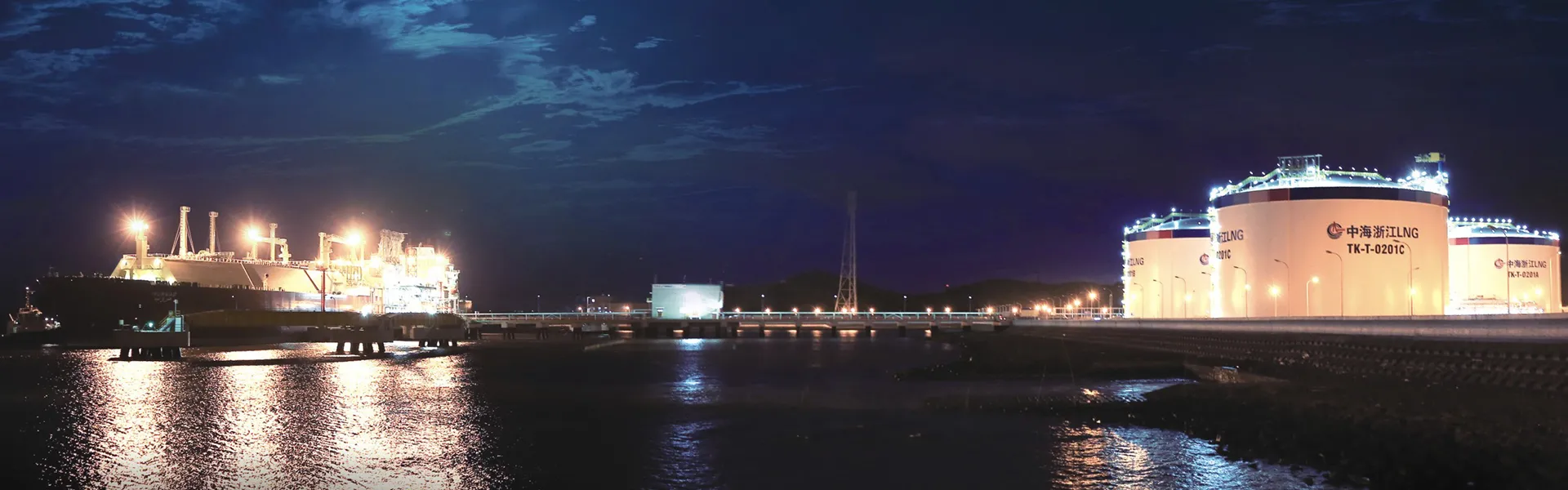
An LNG storage tank is not made from one material. It is an engineered system in which the inner vessel, outer shell, secondary containment, insulation, piping and supports perform different jobs. The correct LNG storage tank material therefore depends on which component is being discussed, the tank configuration and the applicable design code.
The surface directly exposed to LNG at approximately -162 degrees C must retain strength and toughness at cryogenic temperature. Warmer components may use carbon steel, concrete, aluminum, stainless steel and several insulation materials. This guide focuses on that material logic rather than repeating the definition already covered in what an LNG storage tank is.
Many conventional steels lose toughness as temperature falls and can become vulnerable to brittle fracture. A material that performs well in an ambient-temperature water or fuel tank cannot automatically be used in direct contact with LNG. Designers must consider low-temperature toughness, strength, weldability, fatigue, thermal contraction, corrosion allowance and compatibility with the stored medium.
Plate thickness, forming, welding, inspection and quality control must work with the material specification. A grade cannot be substituted without rechecking the engineering basis.
For large field-erected LNG tanks, 9% nickel steel is widely used for primary liquid containment. Nickel helps the steel retain toughness at very low temperature, while its strength supports large tank construction. It is commonly associated with the inner tank of large above-ground facilities and may also be used in thermal corner protection or other cold-facing areas, depending on the containment design.
Its use requires qualified welding consumables, procedures and inspection. The plate specification, welding system and project code must be evaluated together.
Austenitic stainless steels retain good ductility at cryogenic temperature and are used in many shop-fabricated vessels, piping systems and internal components. Certain small and medium vacuum-insulated LNG tanks use a stainless steel inner vessel with a carbon steel outer jacket. Stainless steel is also common in cryogenic process piping, valves and membrane applications where the selected grade and product form meet the design requirements.
CIMC ENRIC's LNG storage tank portfolio includes different cryogenic storage structures, so buyers should confirm the specified inner-vessel material for the exact model rather than applying one description to every tank.
Selected aluminum alloys appear in suspended decks, certain vessel designs and marine containment systems. Their low density can be advantageous, but they require dedicated fabrication, joining and structural assessment.
Carbon steel is commonly used for outer jackets, roofs, support structures and other components that are protected from direct cryogenic exposure. In a vacuum-insulated tank, the outer carbon steel shell provides mechanical protection and helps maintain the insulation space. It must not be confused with the cold inner vessel.
Whether carbon steel is acceptable at a particular location depends on the minimum design metal temperature and credible leak conditions. Areas that could encounter cold liquid require specific low-temperature assessment or protection.
Large full-containment LNG tanks often use a prestressed or reinforced concrete outer structure. The concrete wall provides structural protection and secondary containment as defined by the design. A liner or vapor barrier and cryogenic protection details are incorporated as required. Concrete is therefore part of the containment system, but it does not replace the cryogenic primary liquid barrier.
Tank design | Typical material arrangement | Material priority |
Shop-fabricated vacuum-insulated tank | Stainless steel cold inner vessel, carbon steel or stainless outer shell, vacuum insulation | Low-temperature toughness and vacuum integrity |
Large flat-bottomed tank | 9% nickel steel primary container, metal or concrete outer containment, layered insulation | Cryogenic containment and field weld quality |
Full-containment tank | 9% nickel steel inner tank with prestressed concrete outer tank and vapor barrier | Independent primary and secondary containment duties |
Membrane system | Thin stainless steel or other approved metallic membrane supported by insulation | Thermal movement and continuous support |
ISO tank container | Cryogenic inner vessel, structural outer jacket and ISO frame | Pressure-vessel performance plus transport loads |
This table describes common arrangements, not a procurement specification. The selected code, tank capacity, pressure, containment concept, site conditions and manufacturer design determine the final materials.
Insulation limits heat entering the tank and helps control boil-off gas. Depending on the design, the insulation system may use expanded perlite, multilayer reflective insulation, resilient fiberglass blankets, cellular glass blocks or other approved materials. Vacuum-insulated tanks combine an evacuated annular space with powder or multilayer insulation. Large field-erected tanks use different materials at the sidewall, bottom and suspended deck because the loads and heat-transfer paths are not the same.
Insulation density, settlement, moisture control, compressive strength and installation quality all affect thermal behavior. Boil-off performance cannot be predicted from the metal grade alone.
Product piping, pump wells, nozzles and internal components often use austenitic stainless steel or another approved cryogenic alloy. Aluminum may be used for a suspended deck, while carbon steel may be suitable for warm vapor spaces or external structures. Gaskets, valve seats and seals must also remain compatible with the temperature, pressure and service.
For an LNG tank container, the vessel materials must work with the frame, supports, valve cabinet and transport interfaces. See CIMC ENRIC's LNG tank container page for the dedicated transport application. Marine fuel and carrier systems have additional arrangement and classification requirements, covered in our LNG marine equipment range.
Material selection starts with the medium, minimum design temperature, operating pressure and tank configuration. Engineers then consider capacity, containment requirement, seismic and wind loads, foundation conditions, fire and spill scenarios, corrosion environment, fabrication route and destination regulations.
Procurement teams should ask for the design code, material specification, traceability, welding qualifications, nondestructive examination plan and inspection documentation. They should also confirm whether the proposal covers only the vessel or the complete storage system.
Two tanks can list the same broad material and still differ in weld quality, insulation performance, inspection scope and project suitability. A credible proposal connects the grade to calculated loads, manufacturing controls and applicable standards.
For context on containment configurations and operating roles, review the types of cryogenic storage tanks and CIMC ENRIC's LNG liquefaction and storage solutions.
CIMC ENRIC designs and supplies cryogenic storage and transportation equipment for LNG and other liquefied gases. Rather than offering one material answer for every project, our engineering approach matches the vessel structure, containment duty, insulation system and applicable code to the customer's operating conditions.
To evaluate an LNG storage tank material and configuration, share the required capacity, working pressure, storage temperature, tank type, installation country, site conditions and required standards. Contact CIMC ENRIC for a project-specific technical discussion.
Contact Us
Related Information
Copyright © CIMC ENRIC All Rights Reserved | Sitemap Technical Support  Privacy Policy | CIMC ENRIC Tag
Keywords: CIMC ENRIC LPG Products CNG Products LNG Products


